- 000 – Police for immediate safety
- 13 11 14 – Lifeline
- 1800- RESPECT (1800- 737 732) family violence and sexual assault 24- hour telephone support

What is a stepfamily?
Stepfamilies Australia
Biological families have family trees. Stepfamilies have forests.
We all know it’s easy to get lost in the woods, and to not see the forest for the trees. Re-partnering, settling into new routines, and bringing up kids between several households can bring a lot of difficulties. But it also brings a lot of positives, and stepfamilies can form strong, healthy bonds and raise healthy, happy children.
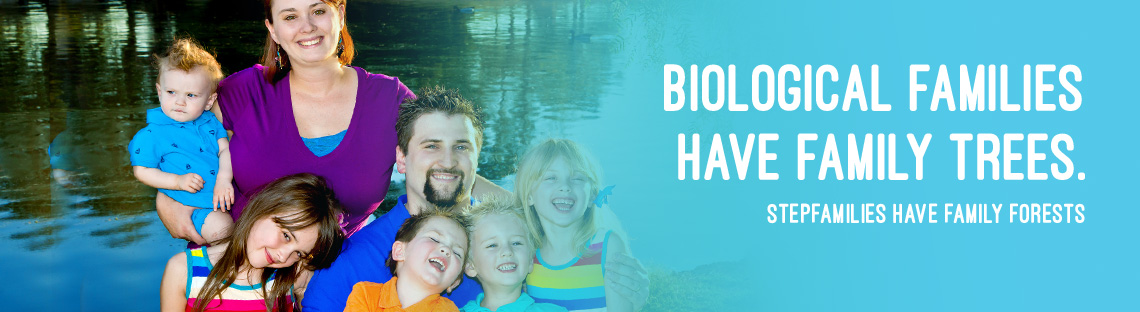
But who doesn’t love a forest?
The relationships within stepfamilies can be every bit as meaningful, impactful and loving as those within first families. In fact, the unique structure of stepfamilies can make them deeper and more impactful. Research shows that children thrive when an adult outside their biological family takes an interest in their life.
The things which make stepfamilies struggle are the same things which make biological families struggle. The major difference is that stepfamilies often face stigma. This isn’t an issue with the family
structure; it’s an issue of how people respond to it.
That stigma can run deep. The word “stepfamily” is often framed as a deficit. It makes us think of the evil stepmother, the absentee stepfather. But if we zoom out for a moment and describe it neutrally, then a stepfamily is just a family where at least one parent is not genetically related to all of the children. That’s it. Notice how there’s no focus on the relationship breakdown, or comparison to an idealised family. By framing stepfamilies in terms of what they are, rather than how they were formed, we can meet people where they’re at and deliver better outcomes.
It’s something new
Step and blended families require a lot of communication. Although this is true of every family, it’s especially pronounced in stepfamilies as everybody’s roles have to be actively negotiated. Biological families have well-known scripts to follow, as they’re assumed to be the norm. But these can create problems for both biological and blended families. Not every member of a blended family needs to like each other, and not every child needs a stepparent to parent or discipline them.
The need for communication isn’t a downside, either. Blended families offer everyone involved a chance to find something which works for them, not an idealised family, or all families.
That’s pretty special.
And you’re not alone
An estimated 1-in-5* Australians are part of a stepfamily. If you take nothing else from reading our resources, remember that you are not alone, and however difficult it might feel, there are many, many people who have faced the same challenges and formed happy, healthy relationships within their stepfamilies.
Stepfamilies Australia provides tools and resources to strengthen the bonds of step and blended families, and inspire a society that recognises, values and supports these families to achieve their highest potential.